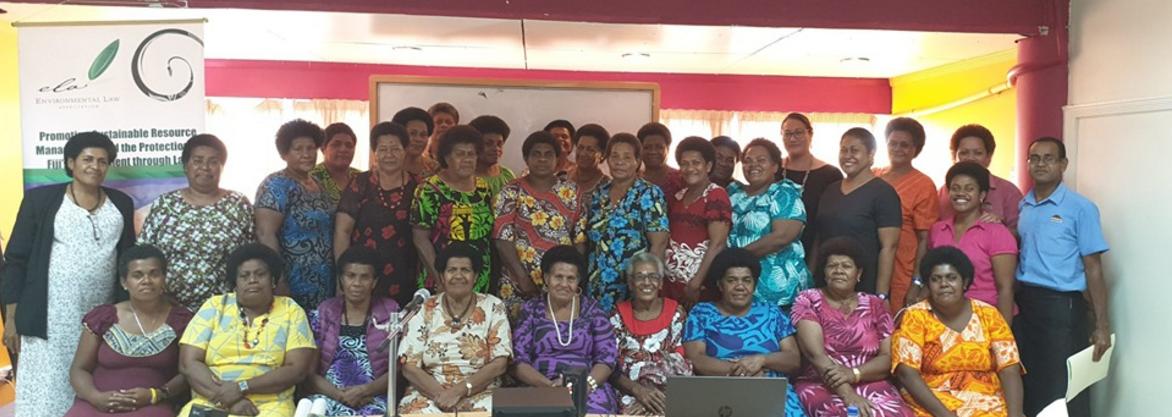
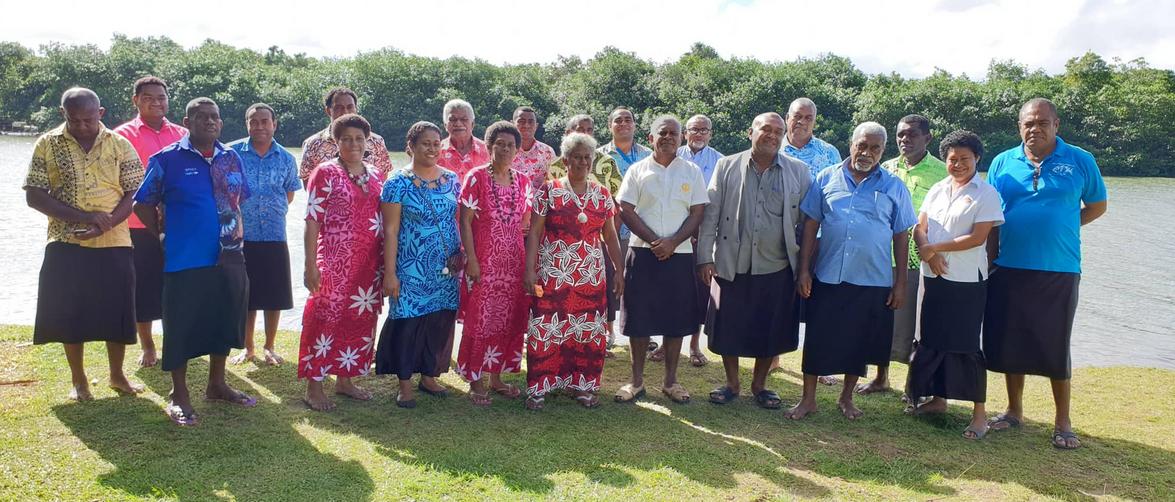
Legal Training Workshop Ba Provincial Office & Soqosoqo Vakamarama Ba & Rewa Provincial Office & Yaubula Management Support Teams YMST (Rewa Province)
Fiji’s policy commitment to sustainable development and sustainable management of coastal and marine resources requires addressing the vulnerability of coastal fisheries to over exploitation and the impacts of land-based activities and development. Coastal communities are at the forefront of the impacts of poor fisheries management and of the degradation of the coastal and marine environment resulting from land-based activities, and also play a central role in the governance and management of coastal and marine resources. However, community governance and management capacity is hampered by poor community awareness of the laws that regulate inshore fisheries and of their rights with regards to the approval of activities and developments that impact on coastal and marine areas.
The Fiji Locally Managed Marine Area (FLMMA) Network and the Women in Fisheries Network (WIFN), who work closely with communities, have documented these impacts, ranging from over-fishing, both by commercial and artisanal fishers, to pollution of coastal waters from a variety of sources including oil spillage of tankers, molasses, mining waste materials and general waste, as well as the excessive cutting of mangroves, the use of mangrove swamps as waste dump, and the impacts of dredging. They have also identified the need for strengthening communities’ awareness of the laws that regulate fisheries and environmental management, both for improved compliance of artisanal fishers, with fisheries laws (such as the requirement for licences and permits), and for enabling the exercise of the communities’ rights relating to environmental management and environmental impact assessment of land-based activities impacting on coastal fisheries.
Community women and the youths play, along men, an important role in fisheries natural resources management, but they often have limited access to capacity building opportunities and to decision making relating to these issues.
In response to these issues, our UNDPSG Grant enables FELA to provide legal and technical advice and support to community groups to improve community capacity and legal awareness of laws and help communities to understand their rights, improve community governance and embrace laws and principles set at national levels. Three main objectives will be pursued towards the overall goal to improve community reef to ridge governance and sustainable management of fisheries and coastal resources in compliance with national laws.
The first objective is to improve community awareness of the laws regulating inshore fisheries and of their enforcement processes, explain the key features of coastal fisheries legislations, in particular the provisions relating to the licences and permits (who needs them, for what activities, and what are the penalties for non-compliance), and to prohibitions and restriction on the catch of fish (protected species, size limits).
The second objective is to improve community awareness of the laws regulating the protection of the environment and the regulation of developments and activities that impact on the environment, in particular rights and obligations of communities under the Environmental Management Act (EMA) and the Environmental Impact Assessment (EIA) process. Communities experiencing issues with land-based developments and activities that causes pollution or otherwise adversely impact their fishing grounds will become aware of what are the obligations of developers or companies conducting these activities under the law, and will empower the communities to demand the implementation of the processes that should be complied with and have their concerns considered in the EIA process.
The third objectives of this project is to provide on-demand access to legal and technical advice to the communities and to the NGOs working with communities on sustainable management of inshore fisheries and natural resources management in a ridge to reef approach. Through this project, FELA will have the resources to respond to request for tailored legal and technical support from communities over the duration of the project. The communities will be able to make such request either directly to FELA, or through the FLMMA and WIF networks, as well as through the Provincial Conservation Officer, YMST, the local representatives of the Ministry of Fisheries or of the Department of Environment.
Beyond the direct benefit of this project to the communities participating in the workshops and receiving tailored legal and technical advice, the lessons learnt from this project will contribute FELA’s mission to improve the sustainable management of natural resources and the protection of the environment through law, and will provide case-studies and knowledge tools that will benefit more communities in Fiji and all partner organisations working in the environmental and natural resources management field.